
The LinkedIn Playbook
How to build a powerful, personal brand on LinkedIn

Happy New Year! We’re already deep into January, and I hope you’re feeling reinvigorated and refreshed. Our household, unfortunately, got hit hard with the flu over the holidays, so most of my ambitious end-of-year plans didn’t happen. Once I emerged from my fever dream, I finally carved out a little space for reflection, planning, and goal-setting.
One of those goals is around creating more valuable content, here on Substack, on LinkedIn, and by recording Season 1 of my podcast.
Over the past few months, I’ve had a lot of people ask me about LinkedIn:
How did you get started?
What is it actually good for?
And how do you use it without it feeling forced or cringey?
For the majority of my career, I treated LinkedIn as a digital résumé. A place to share job updates, company news, and connect with coworkers or people in my industry. Occasionally, I’d use it to explore new roles.
A lot has changed on the platform over the last 15+ years. In 2017, LinkedIn redesigned the feed and algorithm to prioritize relevance and engagement. They’ve continued to evolve and introduced native video, LinkedIn Live, and steadily nudged users toward creator-style content.
Today, I see LinkedIn as one of the most powerful tools for brand-building, and a critical point of leverage for both companies and careers. There are over 1 billion members worldwide and ~260 million monthly active users. Of those, only 1% (!!!) share posts.
That’s a huge opportunity!
Brand-building might sound squishy, but I promise it’s not. It’s the process of building awareness, trust, and affinity with customers, or people you care about.
Why I Leaned In
For a long time, my own posting was fairly sporadic. I work in VC, so I’d share portfolio highlights, event announcements, or commentary on big moments in the industry. I engaged in comments, but I wasn’t consistent with anything.
Still, I started to notice early signals.
On calls, founders and investors mentioned they followed me and liked the work I was doing, or the way I talked about Forum. Founders who submitted pitches through our website said they’d discovered us on LinkedIn. Some referenced specific posts. It was subtle, but something was working.
At the same time, I experienced LinkedIn from the other side, as a consumer of other’s content. I followed investors, CEOs, and operators I’d never met, yet felt like I knew. Over time, I developed real affinity for them, their companies, and their missions. Simply by consuming their content, I wanted to support them.
That’s when it clicked.
So last year, in mid-March, I set myself a simple two-week challenge. Post every weekday on LinkedIn, and spend 10–20 minutes a day adding relevant contacts, engaging thoughtfully in the comments, and sending DMs.
Today, I’m going to share my LinkedIn recommendations and framework with you.
Why Should You Listen To Me?
Everything below is a result of my own experience posting almost everyday on LinkedIn for the last 8 months, plus a deep analysis of what top creators on the platform are doing well (and what they’re not).
Here’s what that looked like in 2025:
I grew my audience from 11k → 25k (+127%)
Drove 3.4M impressions across posts
Reached 1.1M accounts across LinkedIn
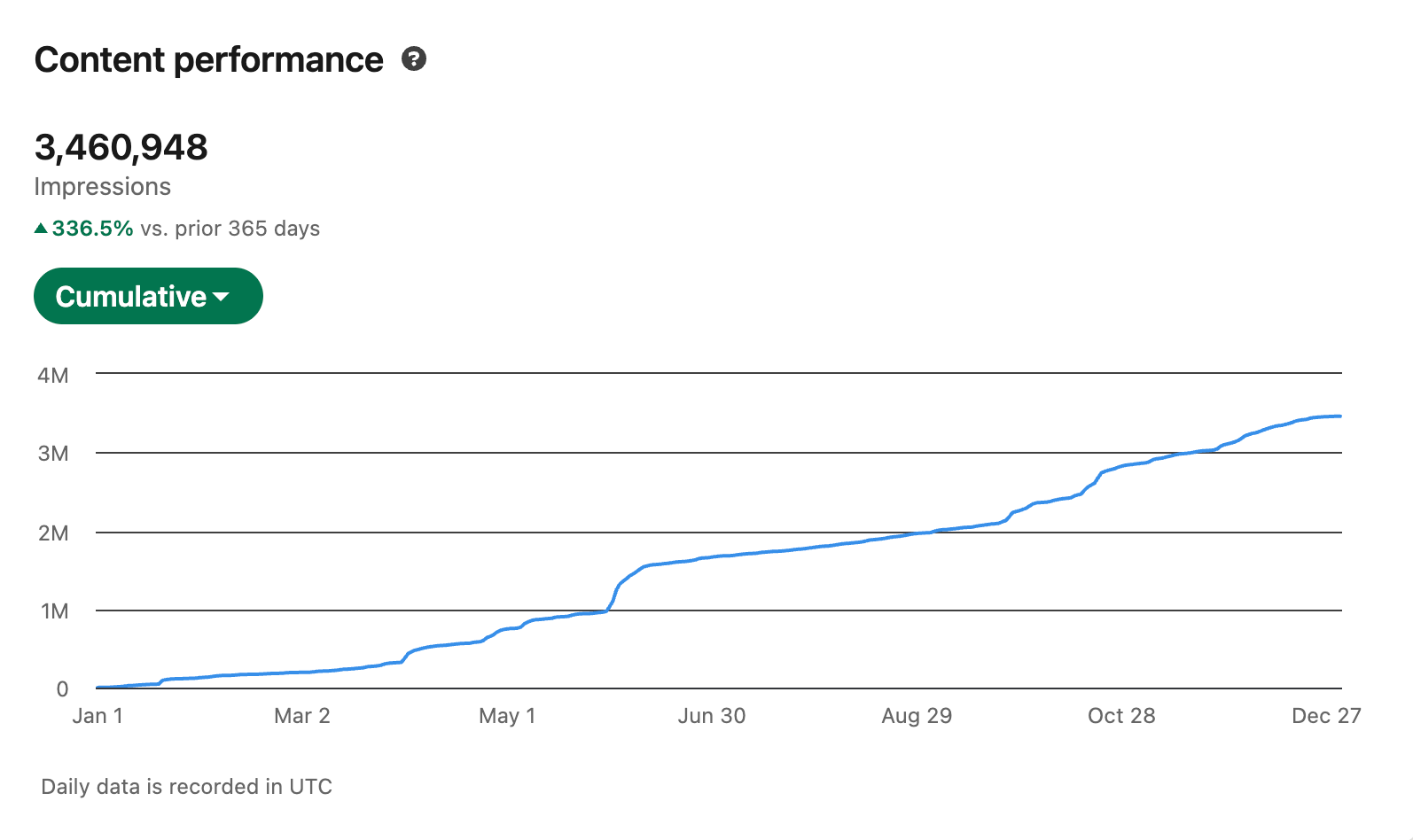
But those are just vanity metrics. What mattered were the outcomes I cared about:
I meaningfully expanded my investor network
I sourced investments directly through LinkedIn
LinkedIn and social became our second-highest performing inbound channel, driving thousands of founder pitches
People felt like they already knew me through LinkedIn, collapsing trust-building that would normally take months.
I was proactively invited to speak on panels, podcasts, and events
So let’s get into the framework!
An Inevitable Truth
Posting on LinkedIn feels cringey and scary at first.
I was embarrassed about posting at the beginning. Many of my posts flopped, getting only a few hundred views. The good news is that everyone is far too focused on themselves to notice.
I was also genuinely mortified when people in my personal life mentioned seeing me on LinkedIn. Being called things like “LinkedIn Queen” or “LinkedIn Influencer” made me want to crawl into a hole.
Despite the cringe, I kept going.
What I learned quickly is that the formula is simple, but not easy.
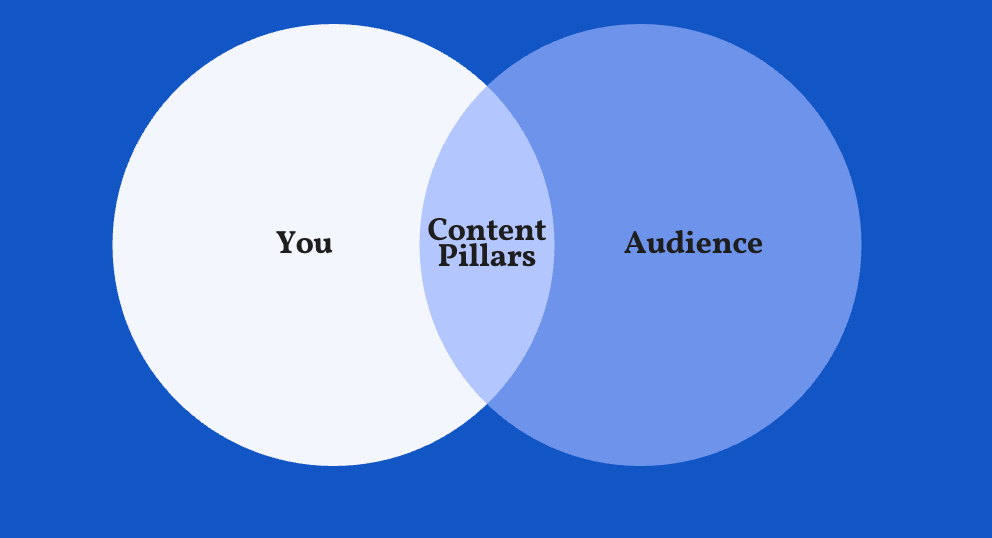
At its core, I had to deeply understand who I was trying to reach, their wants, ambitions, and incentives, and where those overlapped with my own goals, experience, and interests. That intersection became my content pillars.
The most important ingredient, though, was consistency.
I had to leave my ego at the door and show up even on days I didn’t feel like it. I had to be willing to learn, iterate, and evolve in public, because consistency and compounding effort are what separate good from great.
The Playbook
Before we get tactical, I want to re-emphasize one thing matters more than anything else: creating genuinely useful content for a specific audience.
Everything that follows only works once you’re clear on four things:
Your goals, expertise, experience, and interests
Who you’re trying to reach
Their goals, ambitions, challenges, frustrations, etc
Where those overlap
Without it, no amount of optimization will save you. Once that’s clear, you can move into execution.
Content Pillar(s) Example:
I find it helpful to ground this in a concrete example. Let’s say you’re a former healthcare ops leader now building software for wellness clinics (billing + A/R). Your goals with posting on LinkedIn are:
Primary: Reach potential customers (wellness clinic owners / ops leaders)
Secondary: Influence potential talent (early hires who care about healthcare ops)
Your experience, expertise, and interests include:
10+ years running operations at multi-location wellness clinics
Deep experience with billing, reimbursements, denied claims, and cash flow chaos
Now building software to fix the exact problems you lived with
Interested in sustainable healthcare businesses, best-practices, and building calm, efficient ops teams
Who you’re trying to reach & what they care about:
Primary Target:
Founders, owners, and ops leaders at wellness clinics (PT, mental health, integrative medicine, etc.). Clinics doing $1–10M in revenue where billing is no longer “good enough”. They want to learn from others a few steps ahead. They want predictable cash flow and fewer money surprises. They feel frustrated by opaque billing vendors and spreadsheets that never match reality, and want to stop being the bottleneck for billing questions.
Secondary Target:
Operators, PMs, engineers, and early hires who care about healthcare systems. Want to work on real problems with clear impact. Skeptical of “healthcare tech” that’s disconnected from reality
The overlap of you and your audience turns into content pillars like:
Builder’s POV (Founder Story & Company-in-the-Making)
Billing Reality Checks (What’s Broken & How to Fix It)
Operator Playbooks (Clinic Best Practices & Stories)
Based on these pillars, imagine posts that come to life with hooks like:
A $5M clinic shared their #1 rule: no billing process that only one person understands.
When I ran clinic ops, I thought our billing was ‘fine’, until I realized we were floating $400k in unpaid claims without knowing it.
Most wellness clinics don’t have a billing problem. They have a visibility problem.
Now that the foundation is set, let’s get into execution.
Profile Refresh (This Is Your Landing Page 💁♀️)
Your LinkedIn profile should make it immediately obvious, within seconds, why someone should follow you. Assume people are skimming. If a relevant person lands on your page, they should instantly understand:
Who you help
What problem you solve
Why they should care
Your headline matters more than most people think. A simple formula that works:
“I help [audience] achieve [result] by [what you do].”
Your banner image is also underutilized real estate. Use it to reinforce what you do or offer something concrete.
In your About section:
Clearly explain what you do and what someone will get by following you.
End with a call to action. Tell people what to do next.
If you have an “easy give”, a free resource, a free session/audit, guide, or newsletter, put it in your featured section and/or directly in your bio, so it’s easy for people to take action.
Build the Right Audience (Not Just More Followers)
Going viral isn’t the goal. Virality necessitates broad reach and appeal, so while your ego might feel good if a post goes viral, it usually doesn’t get your closer to your target audience or drive any real impact towards your goals.
Start by identifying your ICP or target audience and then build a list of about ~200 people you want to connect with. To start, send ~20 connection requests to people on your target list each week. You can do this manually to start, or try a tool like HeyReach. Be cautious with any third-party tools…LinkedIn has very strict terms and conditions.
In parallel follow people who are in your industry / target audience and viewed as thought-leaders. Comment and engage with their posts, so their audience starts to see your name and so your content starts to get pushed into relevant feeds.
LinkedIn’s search filters are your friend. Use them to find people by role, industry, or company stage.
Use DMs to Start Real Conversations (Not Pitch)
Think of DMs as a way to open the door!
Your goal isn’t to pitch in the first message. I’m sure you’ve received many of these hard-hitting pitches. Do you feel good when you get these messages? Do you respond? I don’t. And it often gives me a negative impression of the person off the bat.
The goal is to pique someone’s interest enough that a conversation makes sense, and, a call ends up on the calendar. If that call goes well and they’re qualified, then they move into your pipeline (if that’s part of your LI goals).
There are two moments when it makes most sense to proactively reach out.
The first is when someone is signaling interest. If a person is consistently liking, commenting on, or sharing your posts, etc. They already recognize your name and your perspective. In those cases, sending a thoughtful DM is a natural next step.
The second moment is after you’ve added someone new and they’ve been seeing your content for a week or two. Still, don’t pitch right away.
Offer a give if you have one. Share a resource. Ask for their perspective on something relevant to them. If the conversation flows and there’s mutual interest, it’s easy to suggest a quick call to continue the discussion.
This is how LinkedIn actually feeds a sales pipeline. Just remember the pipeline comes after the trust and relationship, not before.
The Optimizations & Hacks
The error most people make is starting with optimizations and hacks, and skipping over the foundational work. Once your foundation is set, you can begin optimizing.
LinkedIn rewards consistency and posting 3-5 times per week is plenty. Weekdays perform best, especially:
9:00–10:00 AM
12:00–1:00 PM
4:00–6:00 PM
Avoid Friday afternoons and weekends unless you’re sharing something personal or reflective. Every post should have:
A strong hook in the first 7–12 words (this is especially important..you must pique someone’s interest to continue reading)
One clear idea
Short paragraphs (no walls of text)
A call to action that invites conversation
The first 60 minutes after you post matter most. Reply to every comment. Ask follow-up questions to continue the conversation. LinkedIn sees this engagement as a signal that your post is “hot” and pushes it further. It’s also why you see “Comment X for Y” drive massive reach when executed well.
Your daily routine only needs 15–30 minutes:
Comment on ~5 relevant posts before you publish
Leave at least 2 high-effort comments per day
Respond to 1–2 DMs to nurture relationships
Tone & Finding Time to Write
Human content wins on LinkedIn. Posts that feel like conversations consistently outperform corporate-sounding content or AI slop. Use “I” more than “we.” Share behind-the-scenes moments. Talk about the messy middle. Be specific. Be useful.
I enjoy writing (studied English Creative Writing in college), so I write all my posts! Once I have a draft, I’ll use AI to lightly edit for clarity and flow, or to stress-test a hook and make it stronger, but the thinking and voice starts with me.
Finding the time to write matters just as much as tone.
I keep a simple content planning document with my pillars and goals at the top, and a loose WoW-style calendar below. I usually block 60 minutes on Fridays to write 2–3 posts for the following week. That one block removes the daily pressure of “what should I post today?”
Outside of that block, I keep my eyes and ears open. Good content is everywhere once you’re paying attention:
A founder asks a sharp question on a call → that’s a post
A pattern shows up across multiple investor conversations → that’s a post
An article, chart, or hot take sparks a reaction → that’s a post
I’ll drop these links and ideas into my content planning document, and then carve out 30-40 minutes at the start of the day to review the list and write. Once you’re in a groove, you can layer in systems and leverage. Some people work with agencies or ghostwriters who interview them and turn conversations into content. If you’re consistently finding inspiration in customer calls, you can also build lightweight workflows, using tools like Fireflies and Zapier, to ingest call transcripts and surface potential post ideas when you give them the right context.
In all of this stuff, remember that progress is better than perfection. I hope you found this mini guide helpful, if you did it would mean the world to me if you shared it with a friend! Until next time.
Thanks for writing about this! You have so much to share on this topic! Congrats on your new podcast and glad you are feeling better now too!
This is fantastic - thank you so much for writing this piece and sharing your lessons learned and advice. I've been doing "some" of this but absolutely need to do more. Now, I'd be happy with a few hundred reads of a post on a bad day ... but I'm building a substack on ecosystem access and analysis and working in tandem with LinkedIn. Have you found any patterns/approaches especially valuable when combining your own Substack with Linkedin?